
Moroccan Food Guide for First-Timers: Street Food, Tagine and Vegan Options

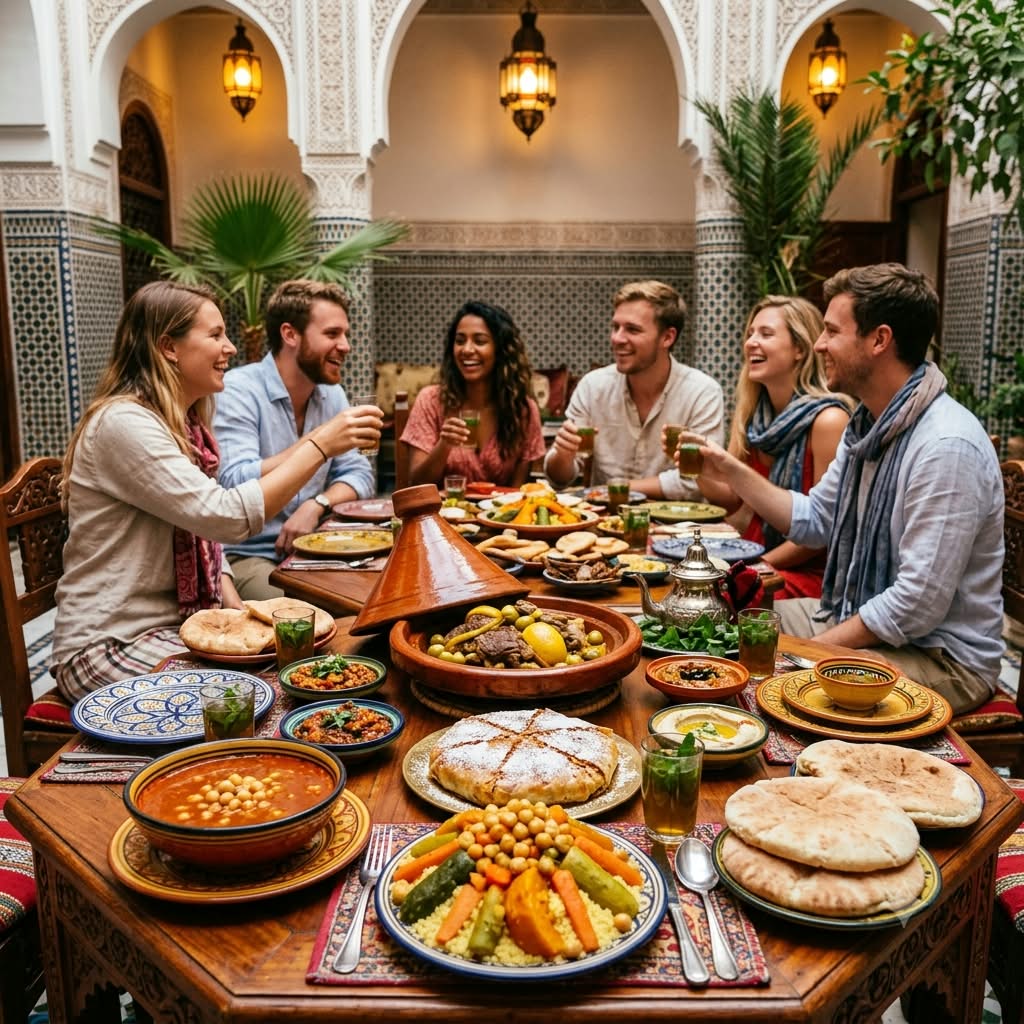
Nobody warns you about the food. They talk about the Sahara, the medinas, the riads. However, Moroccan food guide knowledge for first timers is arguably the most important thing to pack before you land. Because Morocco’s food scene will genuinely stop you in your tracks — repeatedly, unexpectedly, and deliciously.
This is everything you need to know before your first meal in Morocco. Furthermore, it covers street food, sit-down classics, and every vegan option worth knowing about.
Picture yourself standing at a Djemaa el-Fna food stall at 9pm, steam rising from a dozen different pots, your crew pointing at things nobody can name but everyone wants to try. That’s the Morocco food experience — and it starts the moment you land. Book your Morocco group trip with Kito Afrika and eat your way through North Africa’s most extraordinary food culture.
Moroccan Food Guide First Timers: The Essential Dishes to Know
Street Food
Morocco’s street food scene is extraordinary. Moreover, it’s affordable, authentic, and available at every turn. Here’s what to try first:
- Msemen — a flaky, layered flatbread served with honey and butter for breakfast. Warm, simple, and completely addictive.
- Harira — a rich tomato and lentil soup traditionally eaten to break the Ramadan fast. Furthermore, it’s available year-round and costs almost nothing.
- Merguez — spiced lamb sausages grilled over open charcoal. Moreover, they’re served in fresh bread with harissa and available on almost every corner.
- Sfenj — Moroccan doughnuts, fried fresh and dusted lightly in sugar. Additionally, they pair perfectly with mint tea for a mid-morning street snack.
- Briouat — crispy fried pastry parcels filled with spiced meat or cheese. Furthermore, they appear at food stalls, markets, and riad breakfast tables equally.
Sit-Down Classics
These are the dishes every first-timer must order at least once:
- Tagine — Morocco’s most iconic dish. Slow-cooked meat or vegetables in a conical clay pot with preserved lemon, olives, and aromatic spices. Moreover, every region produces a slightly different version. Consequently, you’ll want to try multiple variations across the trip.
- Couscous — traditionally served on Fridays, couscous arrives piled high with vegetables, chickpeas, and slow-cooked meat. Furthermore, sharing it with a group from a single large plate is the authentic Moroccan way.
- Pastilla — a genuinely extraordinary sweet-savoury pie combining spiced pigeon or chicken with almonds and icing sugar inside flaky warqa pastry. Additionally, it’s one of those flavour combinations that sounds wrong and tastes completely right.
- Mechoui — whole slow-roasted lamb, seasoned simply with cumin and salt. Moreover, it’s typically served at celebrations and special occasions. Consequently, trying it feels like a genuine cultural privilege.
- Zaalouk — a smoky aubergine and tomato salad served cold as a starter. Furthermore, it’s one of Morocco’s most underrated dishes and appears on almost every traditional menu.
Drinks Worth Knowing
- Mint tea — Morocco’s most important social ritual. Furthermore, it’s poured from height to create froth and served sweet. Refusing mint tea is genuinely considered impolite. Consequently, just accept it and enjoy every cup.
- Avocado juice — thick, creamy, and served cold at juice stalls across every city. Moreover, it costs almost nothing and tastes extraordinary.
- Freshly squeezed orange juice — Moroccan oranges are exceptional. Furthermore, a glass costs less than a dollar at most market stalls.
Vegan Options in Morocco: Better Than You’d Expect
Morocco is surprisingly vegan-friendly. Moreover, the cuisine’s heavy reliance on vegetables, legumes, and spices means plant-based travelers eat extremely well without significant compromise.
Here’s what vegans should know:
- Zaalouk, taktouka, and khobz — smoky vegetable salads and fresh bread form the backbone of vegan Moroccan eating. Furthermore, they appear on almost every traditional menu.
- Vegetable tagine — specify no meat and no butter. Moreover, Moroccan spice blends are so complex that vegetable tagines deliver extraordinary flavour without animal products.
- Harira — traditionally vegan when made without lamb. Furthermore, always confirm with your server before ordering.
- Msemen with argan oil — request argan oil instead of butter for a genuinely excellent vegan breakfast. Additionally, argan oil is a Moroccan specialty worth experiencing regardless of dietary preference.
- Couscous with seven vegetables — the classic vegetarian couscous preparation uses chickpeas, pumpkin, courgette, and turnip in a richly spiced broth. Moreover, it’s one of Morocco’s most nourishing and satisfying dishes.
The Djemaa el-Fna Night Market: Morocco’s Greatest Food Experience
Nothing prepares you for Djemaa el-Fna at night. Furthermore, the square transforms completely after dark — food stalls appear from nowhere, smoke rises from a hundred grills simultaneously, and vendors call out in every language simultaneously.
Go hungry. Moreover, go with your crew. Consequently, pointing at things nobody recognises and sharing everything becomes one of the trip’s most joyful collective experiences.
For the full picture of what to expect on a Kito Afrika Morocco trip — beyond just the food — read our Riads, Rooftops and New Best Friends: What to Expect on a Kito Afrika Morocco Trip. It covers everything from riad breakfasts to Sahara nights in honest detail.
When to Go for the Best Food Experience
November delivers Morocco’s best food season. Markets are less crowded. Furthermore, street food vendors operate at full capacity without peak-season overwhelm. Additionally, cooler temperatures make long outdoor market evenings genuinely comfortable rather than exhausting.
Read our Why November Is Secretly the Best Month to Visit Morocco for the complete seasonal breakdown — food culture included.
Who Will You Meet Around the Table?
Kito Afrika’s Morocco groups share meals deliberately. Furthermore, communal eating is central to how Moroccan food culture builds connection — and our itinerary reflects that completely.
You’ll share couscous from a single plate with under-30s from across the US and UK. Moreover, you’ll navigate Djemaa el-Fna food stalls together. Consequently, some of the trip’s most memorable moments happen over food rather than at landmarks.
What Will You Feel?
Surprised, first. Morocco’s flavours hit differently from anything most Western travelers have encountered. Furthermore, the generosity embedded in Moroccan food culture — the mint tea, the shared plates, the hospitality — creates warmth that extends well beyond the meal itself.
You’ll feel genuinely nourished. Additionally, you’ll feel that specific joy of discovering a food culture so rich it changes how you think about eating when you get home.
Ready to Eat Your Way Through Morocco?
Picture this: mint tea poured from height on a Marrakech rooftop, a steaming tagine arriving at your table, your crew passing plates around and trying everything. That meal is waiting for you on November 3rd — and so is the rest of the trip.
Explore our Morocco group trip for young travelers and see the full itinerary. Or if you’d rather talk it through first, chat directly with Kito on WhatsApp — we’ll answer every question and help you decide if this is your trip.
FAQ Schema
Q: What is the most famous Moroccan dish?
A: Tagine is Morocco’s most iconic dish — slow-cooked meat or vegetables in a clay pot with preserved lemon, olives, and aromatic spices. Furthermore, couscous served with seven vegetables runs a very close second.
Q: Is Moroccan food vegan friendly?
A: Yes. Morocco’s cuisine relies heavily on vegetables, legumes, and spices. Moreover, vegetable tagines, harira soup, zaalouk, and couscous with seven vegetables are all excellent vegan options when prepared without butter or meat.
Q: What should I eat first in Morocco?
A: Start with msemen and mint tea for breakfast, harira soup for lunch, and a lamb tagine for dinner. Furthermore, visit Djemaa el-Fna food stalls on your first evening for the full street food introduction.
Q: Is street food safe to eat in Morocco?
A: Generally yes, particularly at busy, high-turnover stalls where food moves quickly. Moreover, traveling with a local guide — as Kito Afrika provides — removes the guesswork entirely.
Q: How much does food cost in Morocco?
A: Street food costs between $1 and $4 per item. Furthermore, sit-down restaurant meals run between $8 and $20 per person. Consequently, Morocco delivers exceptional food value for young travelers on real budgets.
…